
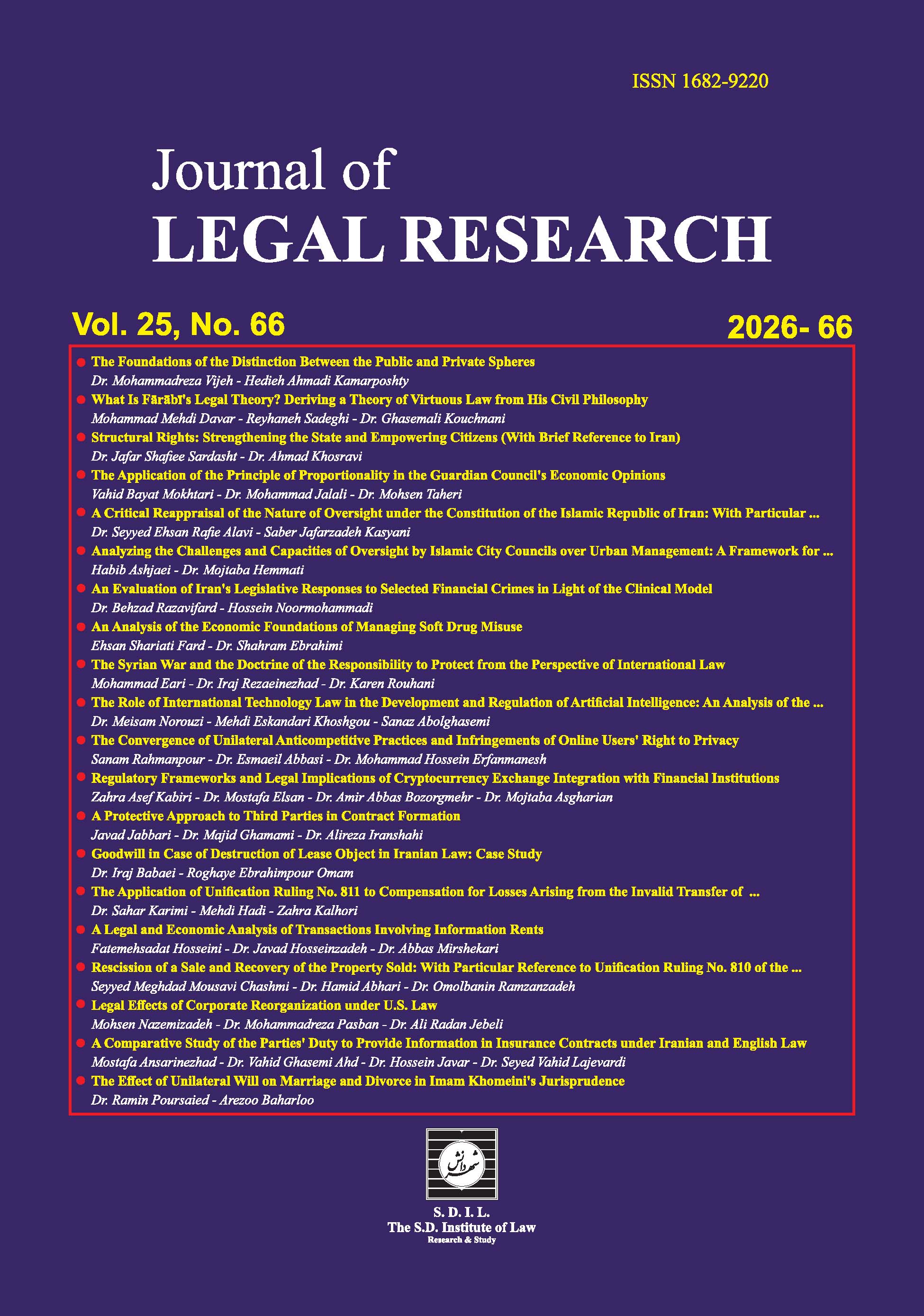
* Publication period: Quarterly
* Type of articles that can be published: Research Article
* Journal rank: Scientific (A)
* The cost of publishing the article: 60,000,000 Rials
* How to issue an article acceptance certificate: by sending an email to the authors
* Type of article acceptance certificate: the publication date and DOI code of the article are mentioned
* The name of the similarity finder software used to review articles: Hamiyab
* Evaluation method: equivalent, double-blind (the referees do not have the authors' information and the authors do not have information about the referees.)
* Duration of initial evaluation of the article: 10 days
* Duration of article evaluation by referees: 3 to 4 months
* How to contact the magazine office: through the contact us section
* The beginning of the publication of the magazine: 1381 in the form of two quarterly (in 1384, it received a scientific-promotional degree from the Scientific Commission of Scientific Publications of the country, and from the spring of 1397, number 33, it became a quarterly. Currently, according to the regulations of the Ministry of Science, Research and Technology dated 02/09/2018, all publications, including the Legal Research Quarterly, have scientific validity.)
* How to access the text of the articles: This publication is an Open Access publication and the articles are free to download.
* How to send the article to the publication? Through the Authors Guide section
+ Only one article is published from each author per year, so before submitting the article, make sure about the articles that you or your fellow authors are about to publish.
+ This publication is published in cooperation with " Iranian Association of Administrative Law " based on the signed memorandum.
+ This quarterly followsthe rules of the International Committee on Publishing Ethics ( COPE ).
+ This publication is in Islamic World Science Reference Database ( ISC ), Noormags , Magiran , Google Scholar , and also in international databases such as DOAJ , ACADEMIA and Copernicus Index.
Pages 7-35
Mohammad Reza Vijeh, Hedieh Ahmadi Kamarposhty
Pages 37-57
Mohamad Mahdi Davar, Reyhaneh Sadeghi, Ghasem Ali Kouchnani
Pages 59-91
Jafar Shafiee Sardasht, Ahmad Khosravi
Pages 93-114
Vahid Bayat Mokhtari, Mohammad Jalali, Mohsen Taheri
Pages 115-140
Seyyed Ehsan Rafie Alavi, Saber Jafarzadeh Kasyani
Pages 141-169
Habib Ashjaei, Mojtaba Hemmati
Pages 171-201
Behzad Razavifard, Hossein Noormohammadi
Pages 203-232
Ehsan Shariati Fard, Shahram Ebrahimi
Pages 233-257
Mohammad Eari, Iraj Rezaeinezhad, karan rohani
Pages 259-282
Meisam Norouzi, Mehdi Eskandari khoshgu, Sanaz Abolghasemi
Pages 283-305
Sanam Rahmanpour, Esmail Abbasi, Mohammadhossein Erfanmanesh
Pages 307-339
Zahra Asef Kabiri, Mostafa Elsan, Amir Abbas Bozorgmehr, Mojtaba Asgharian
Pages 341-370
Javad Jabbari, Majid Ghamami, Alireza Iranshahi
Pages 371-405
Iraj Babaei, Roghaye Ebrahimpour Omam
Pages 407-432
Sahar Karimi, Mehdi Hadi, Zahra Kalhori
Pages 433-461
Fatemehsadat Hosseini, Javad Hosseinzadeh, Abbas Mirshekari
Pages 463-486
Seyyed Meghdad Mousavi Chashmi, Hamid Abhari, Omolbanin Ramzanzadeh
Pages 487-511
Mohsen Nazemizadeh, Mohammad Reza Pasban, Ali Radan Jebeli
Pages 513-542
Mostafa Ansari Nejad, Vahid Ghasemi Ahd, Hossein Javar, Seyyed Vahid Lajevardi
Pages 543-569
Ramin Poursaied, Arezoo Baharloo


